In today’s business environment, accounting and taxation have become essential skills for businesses, professionals, and students. Every business needs proper financial records, accurate invoices, tax calculations, and timely GST compliance. This is why learning Tally + GST can be a valuable skill for anyone interested in accounting, finance, or business management.
Tally is one of the widely used accounting software solutions for managing business transactions, while GST (Goods and Services Tax) is an important indirect tax system in India. When you learn Tally along with GST, you can understand both accounting processes and practical tax-related work.
This guide explains what Tally + GST is, its importance, major features, benefits, career opportunities, and the skills you can develop by learning it.
What is Tally+GST?

Tally + GST refers to learning accounting software along with practical knowledge of Goods and Services Tax. Tally can be used to record sales, purchases, expenses, receipts, payments, and other financial transactions. GST knowledge helps you understand how tax is calculated, recorded, and reported on taxable transactions.
Tally Prime is commonly used for business accounting and financial management. With GST features, users can maintain GST-related records, create tax invoices, calculate applicable taxes, and prepare information needed for GST compliance.
A Tally + GST course generally combines accounting fundamentals with practical GST concepts so that students can learn how accounting work is performed in real business situations.
Why Learn Tally+GST?
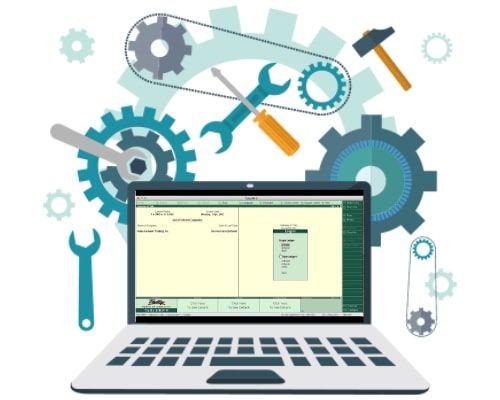
Businesses generate numerous financial transactions every day. Maintaining these transactions manually can be difficult and time-consuming. Accounting software makes it easier to record and organize financial information.
Learning Tally+GST can help students and beginners develop practical accounting skills. Instead of learning only theoretical concepts, learners can practice creating companies, recording transactions, preparing invoices, managing ledgers, and working with GST-related entries.
This combination can be especially useful for students who want to build a career in accounting, finance, taxation, or office administration.
Important Features of Tally Prime
Tally Prime provides several features that help businesses manage their accounting operations. Some important areas include:
1. Company Creation
Users can create and manage company accounts in Tally Prime. Company information such as financial year, accounting details, and taxation settings can be configured according to business requirements.
2. Ledger Management
Ledgers are an important part of accounting. Tally allows users to create and manage ledgers for customers, suppliers, expenses, income, banks, cash, and other accounts.
3. Sales and Purchase Entries
Businesses regularly make sales and purchases. Tally helps users record these transactions systematically and maintain proper accounting records.
4. GST Billing
Tally can be used to create GST-related invoices containing important information such as taxable value, GST rate, and applicable tax amounts.
5. Inventory Management
Businesses dealing with products can use Tally for inventory management. Stock items, quantities, units, purchases, sales, and stock balances can be tracked.
6. Financial Reports
Tally provides various accounting reports that can help businesses understand their financial position. Reports may include Profit & Loss Account, Balance Sheet, Trial Balance, Day Book, and outstanding reports.
Understanding GST
GST stands for Goods and Services Tax. It is an indirect tax applicable to the supply of goods and services in India.
GST replaced several indirect taxes that were previously levied by central and state governments. The GST system is designed around a common tax framework and includes different components depending on the nature and location of a transaction.
For accounting professionals, understanding GST is important because businesses need to correctly record taxable transactions and maintain appropriate tax records.
Types of GST
There are different components of GST that learners should understand.
CGST
CGST stands for Central Goods and Services Tax. It is generally applicable when goods or services are supplied within the same state, along with SGST.
SGST
SGST stands for State Goods and Services Tax. It is generally charged on intra-state supplies along with CGST.
IGST
IGST stands for Integrated Goods and Services Tax. It generally applies to inter-state supplies and certain other transactions covered under the IGST framework.
Understanding the difference between CGST, SGST, and IGST is an important part of practical GST accounting.
GST Billing in Tally
GST billing is one of the important practical skills covered in Tally + GST training.
A GST invoice generally contains information such as:
- Business name and address
- GSTIN, where applicable
- Invoice number
- Invoice date
- Customer details
- Product or service description
- Quantity
- Rate
- Taxable value
- Applicable GST rate
- GST amount
- Total invoice value
In Tally, users can configure GST details and create invoices according to the applicable transaction requirements.
Accounting Entries in Tally

Learning accounting entries is an important part of Tally training. Students generally practice different types of vouchers and transactions.
Common voucher types include:
- Payment Voucher
- Receipt Voucher
- Sales Voucher
- Purchase Voucher
- Contra Voucher
- Journal Voucher
- Debit Note
- Credit Note
For example, when a business purchases goods, the purchase transaction can be recorded through the appropriate voucher. Similarly, sales transactions can be recorded using a sales voucher.
Regular practice helps learners understand how real business transactions are converted into accounting entries.
Tally+GST Course Syllabus
A practical Tally + GST course may include the following topics:
Accounting Fundamentals
Students can learn basic accounting concepts such as assets, liabilities, capital, income, expenses, debit, credit, journal entries, and ledgers.
Tally Prime
Learners can understand company creation, ledger creation, groups, vouchers, accounting entries, reports, and other important features of Tally Prime.
GST
GST training generally covers basic GST concepts, GST types, tax rates, GST invoices, input tax concepts, and GST-related accounting entries.
Inventory Management
Students can learn stock groups, stock categories, units of measurement, stock items, purchases, sales, and inventory reports.
Banking
Tally training can also introduce banking-related accounting activities, including bank ledgers, receipts, payments, and reconciliation concepts.
Reports
Learners can practice generating important accounting reports such as Trial Balance, Profit & Loss Account, Balance Sheet, Day Book, and outstanding reports.
Benefits of Learning Tally+GST
There are several benefits of learning Tally + GST.
Practical Accounting Skills
The course can help learners develop practical accounting skills instead of relying only on theoretical knowledge.
Better Understanding of GST
Students can understand how GST is connected with everyday business transactions and accounting records.
Useful for Small Businesses
Entrepreneurs and small business owners can learn how accounting software can help organize their financial records.
Office Skills
Tally knowledge can be useful for people applying for accounting and administrative positions where basic accounting software skills are required.
Career Development
Adding Tally and GST knowledge to your skill set can help improve your profile for entry-level accounting-related roles.
Career Opportunities After Tally+GST
After learning Tally + GST, candidates can explore various entry-level roles depending on their qualifications and practical skills.
Some common job profiles include:
- Junior Accountant
- Accounts Assistant
- Billing Executive
- GST Assistant
- Accounts Executive
- Finance Assistant
- Data Entry Executive
- Taxation Assistant
- Office Accountant
Job responsibilities and requirements can vary from one organization to another. Practical knowledge, communication skills, Excel skills, and experience can further support career development.
Who Should Learn Tally+GST?

Tally + GST can be useful for different types of learners.
Students
Commerce students and other learners interested in accounting can develop practical software skills alongside their academic studies.
Job Seekers
People looking for entry-level accounting or billing jobs can learn Tally and GST to build relevant workplace skills.
Business Owners
Small business owners can gain a better understanding of their accounting records, invoices, and GST-related transactions.
Working Professionals
Professionals who want to move toward accounting or finance-related responsibilities can add Tally + GST knowledge to their existing skills.
Tally+GST vs Traditional Manual Accounting
Manual accounting requires maintaining records using physical books and spreadsheets. Although manual methods may still be used in some situations, accounting software can make organizing large numbers of transactions easier.
Tally helps businesses maintain structured records and generate reports from recorded transactions. It can reduce repetitive manual calculations and make it easier to locate accounting information.
However, software knowledge should be combined with a proper understanding of accounting principles. Simply knowing how to operate software is not enough; an accountant should also understand why a transaction is recorded in a particular way.
How to Learn Tally+GST Effectively
The best way to learn Tally+GST is through regular practical practice.
Start with basic accounting concepts and gradually move toward Tally Prime. Practice creating companies, groups, ledgers, and stock items. Then record sales, purchases, payments, receipts, and journal transactions.
After understanding basic accounting entries, practice GST-related transactions and invoices. Finally, learn how to generate and understand important financial reports.
Working on practical business examples can make the learning process easier and help you understand how accounting software is used in real situations.
Conclusion

Tally + GST is a practical combination of accounting software knowledge and GST understanding. It can help students, job seekers, business owners, and professionals develop useful accounting and taxation skills.
From creating ledgers and recording transactions to preparing invoices and understanding GST-related accounting, Tally Prime provides tools for managing several important accounting activities.
If you are interested in accounting, finance, billing, taxation, or office administration, learning Tally + GST can be a useful addition to your professional skill set. With consistent practice and a strong understanding of accounting fundamentals, learners can become more confident in handling day-to-day accounting tasks.
The key to mastering Tally + GST is not just completing a course but practicing real-world transactions regularly and understanding the accounting principles behind every entry.
